Barbican Event Photographer: A Corporate Venue Guide

Hiring a Barbican event photographer means planning for one of London’s most distinctive venues: a Grade II listed Brutalist arts centre with a 1,943-seat Hall, the Frobisher Rooms for meetings of 10 to 170, and a tropical Conservatory. I have photographed debates and evening events across the Barbican, and the best results come from knowing how its concrete, low light and coloured lighting behave on camera.
I have run my own photography business for 13 years, photographing conferences and corporate events across London, and the Barbican is a venue I always enjoy. It rewards a photographer who knows the building and can catch out one who does not. This guide covers what I have learned there and what I would suggest if you are planning an event at Silk Street.
What Have I Photographed at the Barbican?
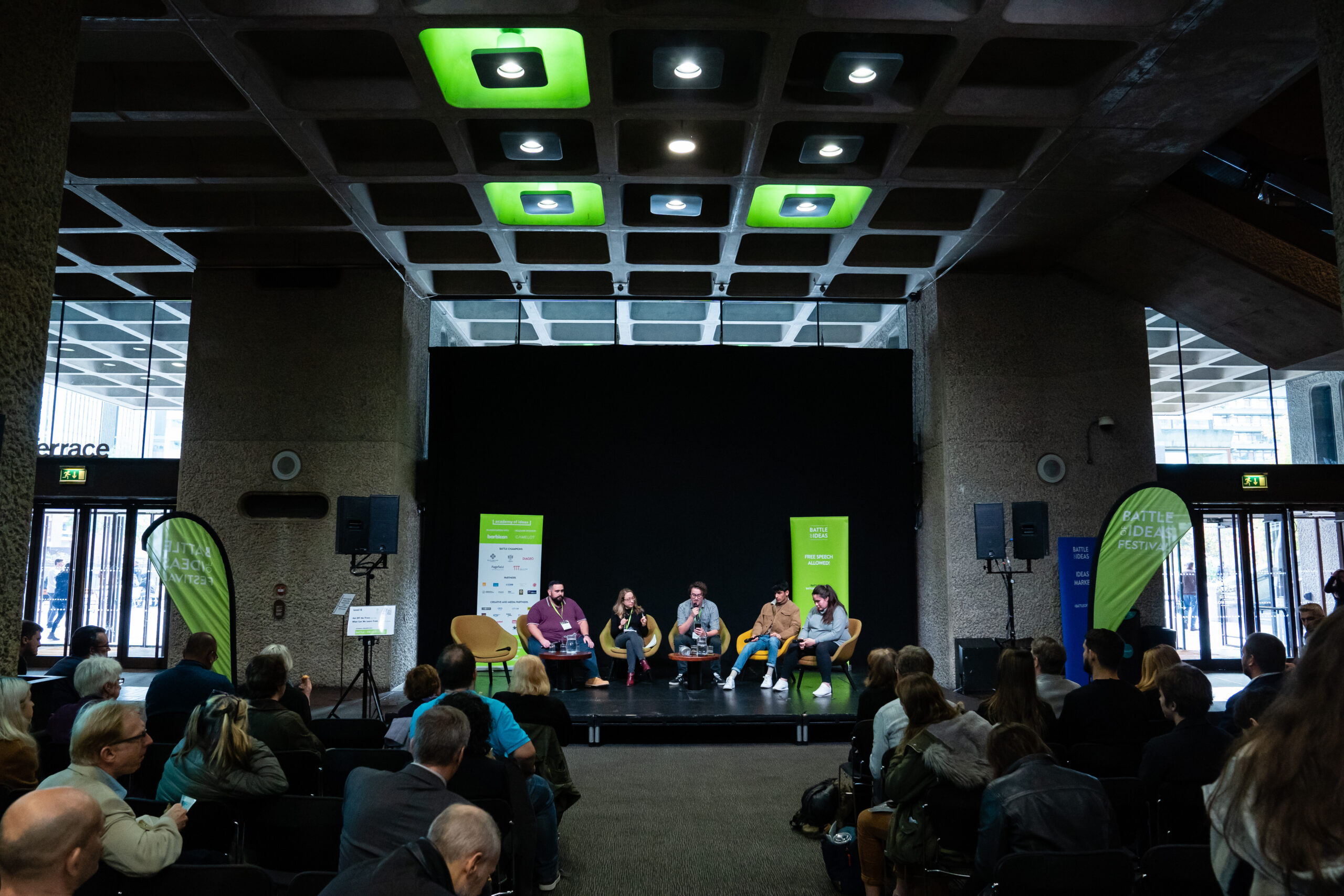
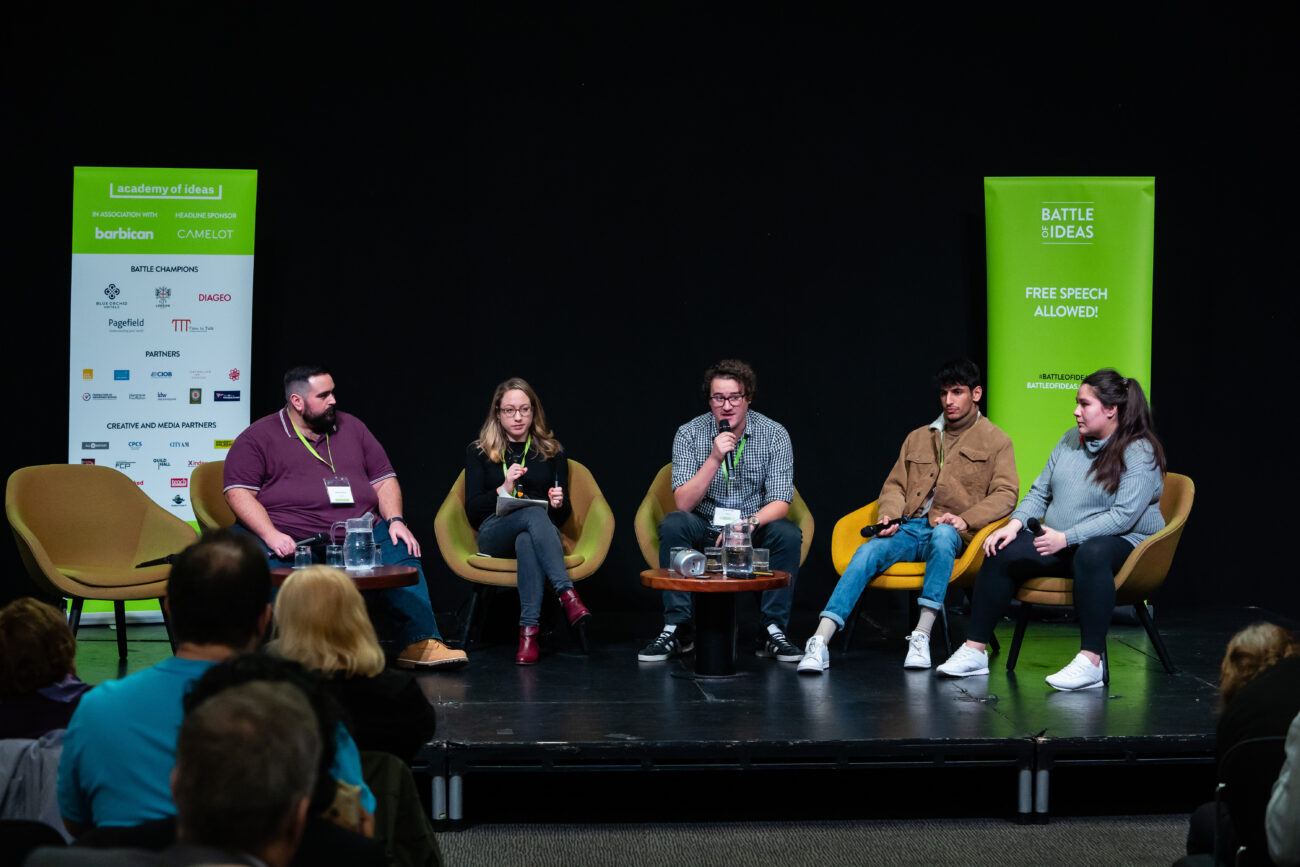
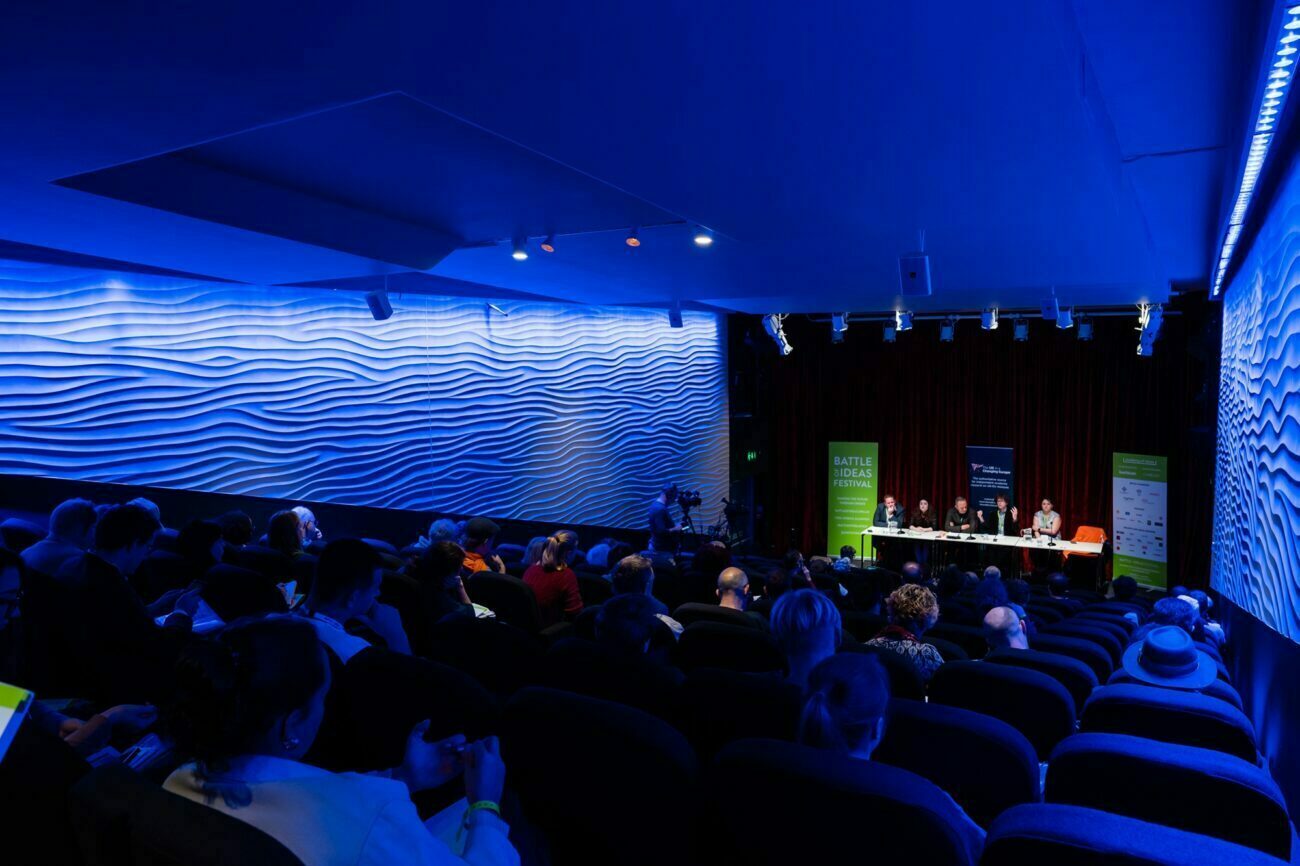
My main work at the Barbican has been the Battle of Ideas festival, a weekend of public debates that its organisers billed in 2019 as more than 100 discussions with over 450 speakers. That meant moving between a stage set up in one of the foyers, sessions in smaller auditoriums and a steady flow of attendees in between, without interrupting a single debate.
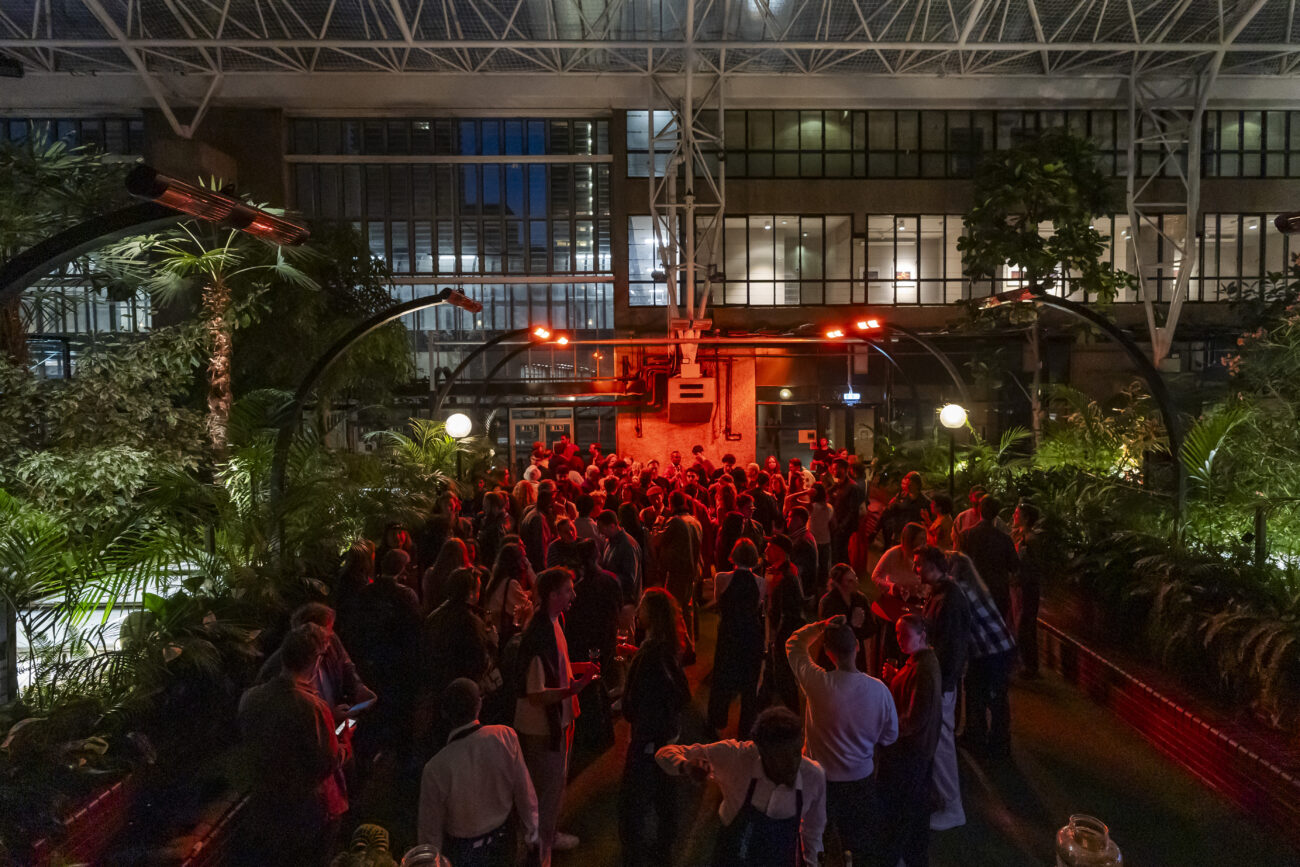
I have also covered an evening event in the Conservatory, where the plants, the glass roof and the coloured lighting create a completely different atmosphere from the foyers below. Seeing both sides of the building is useful when I advise organisers, because a daytime conference and an evening reception at the Barbican need very different approaches.
Which Barbican Spaces Work Best for Corporate Events?
It depends on your format: the Barbican Hall suits large conferences and AGMs, the Frobisher Rooms suit meetings and breakout sessions, and the Garden Room and Conservatory suit receptions and parties. Each space photographs very differently, so it helps to know what you are working with.
What Is the Barbican Hall Like for Conferences?
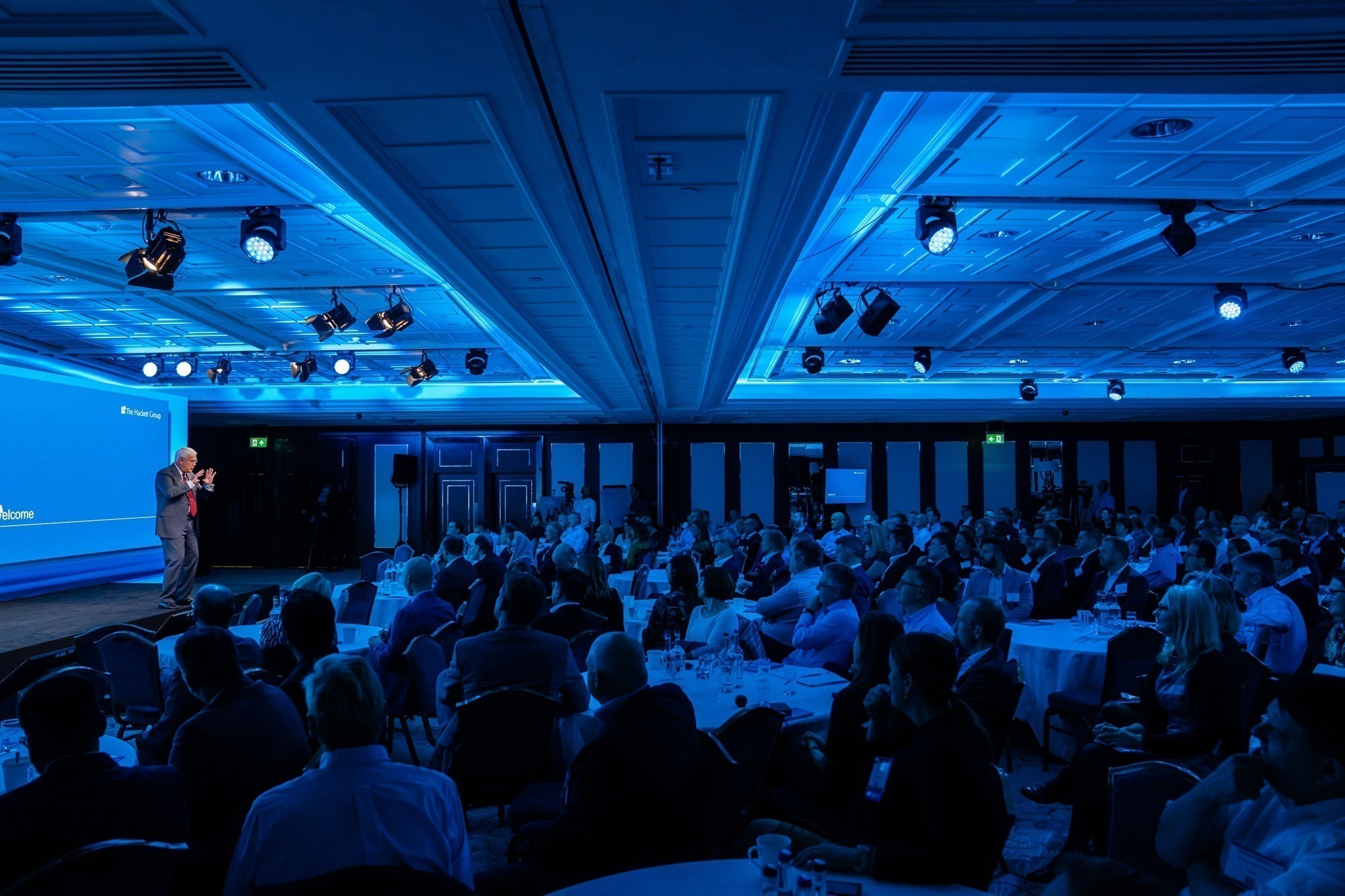
The Hall seats up to 1,943 people across the stalls, circle and balcony, with tiered seating and good sight lines. Tiered seating is helpful for photography because it gives me different heights to work from, so I can show the speaker, the audience and the scale of the room. The venue also lists booths at the back of the Hall that can be used for photography, which is worth raising with your event manager if you want a clean, elevated angle.
How Do the Frobisher Rooms Work for Meetings?
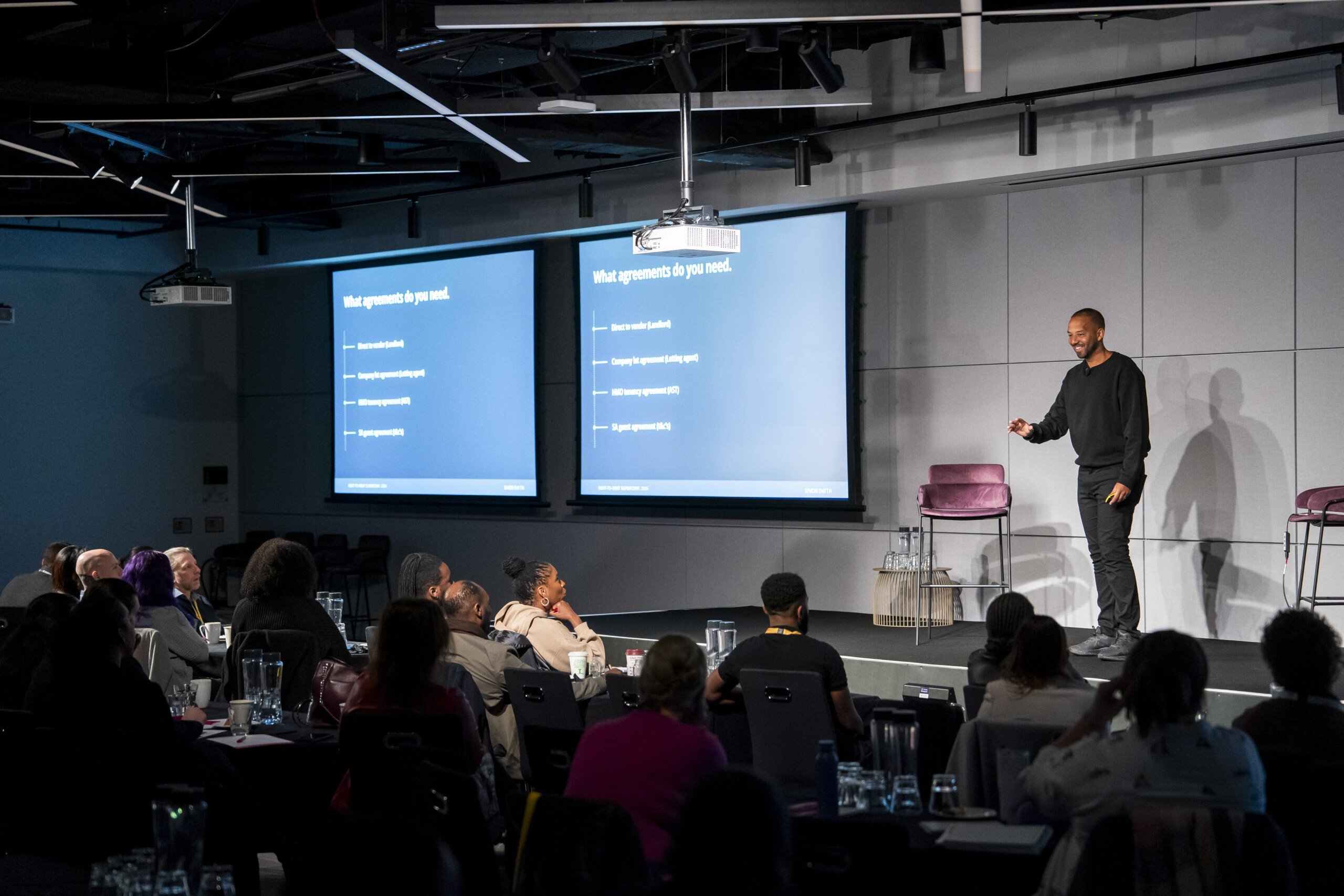
The Frobisher Rooms are a suite of conference rooms for 10 to 170 people, divided by removable soundproofed partitions. In smaller rooms, discretion matters most. I use cameras with a silent shutter, so I can work through a breakout session without distracting the speaker or the people listening.
Why Book the Conservatory Before 2027?
Because the Conservatory closes in January 2027 for a three-year restoration and is not planned to reopen until 2030. It holds up to 150 people for a standing reception, and the neighbouring Garden Room can host up to 300, so the two spaces work well together for larger parties.
After dusk, the coloured lighting woven through the planting makes evening events look spectacular. If you have been considering the Conservatory for a winter party or product launch, this season is your last chance to use it for a while.
What Are the Photography Challenges at the Barbican?
The main challenges are low, mixed light and strong colour. The Brutalist concrete is striking but soaks up light, and many spaces rely on stage lighting or coloured LEDs, such as the Garden Room’s colour-changing ceiling and the Conservatory’s evening lighting.
Coloured light can look wonderful in a wide shot and unflattering on a face, so I balance atmosphere with natural-looking portraits of speakers and guests, then correct colour carefully in the edit. The building is also a real asset: the coffered concrete ceilings and huge foyer windows make excellent backdrops for wide shots that show the scale of your event.
How Do I Plan the Photography for a Barbican Event?
Start with a clear brief and a timeline showing which spaces you are using and when. The Barbican is large and spread across several levels, so knowing where sessions, breakouts and the reception take place helps me move between them without missing key moments.
Before the day, I am happy to have a Zoom call to go through your plans, your shot list and how you will use the images afterwards. If you would like a starting point, my guide on how to brief a corporate event photographer includes a shot list you can adapt.
Getting there is straightforward. Barbican tube station is about a four-minute walk from the Silk Street entrance, and Moorgate is around seven minutes away. My setup is streamlined, so I travel easily by public transport and can cover the whole building on foot.
How Quickly Will I Receive My Barbican Event Photos?
You will usually receive a selection of preview images within 24 to 48 hours, ready for social media while people are still talking about your event. The full edited set typically follows within one to two weeks, depending on the size and length of the event.
Rather than fixed packages, I provide a tailored quote, which includes the photography time, professional editing and delivery of high-resolution images. I offer half-day and full-day coverage, and for multi-day events I bring backup equipment and batteries so every day receives the same attention.
Are You Planning an Event at the Barbican?
If you need a Barbican event photographer for a conference, debate or reception, I would be glad to help. You can see more of my work as a London conference photographer, read my guide to another conference venue I know well, the Business Design Centre, or get in touch with your date and plans. I aim to reply to every enquiry within 24 hours during the working week.